

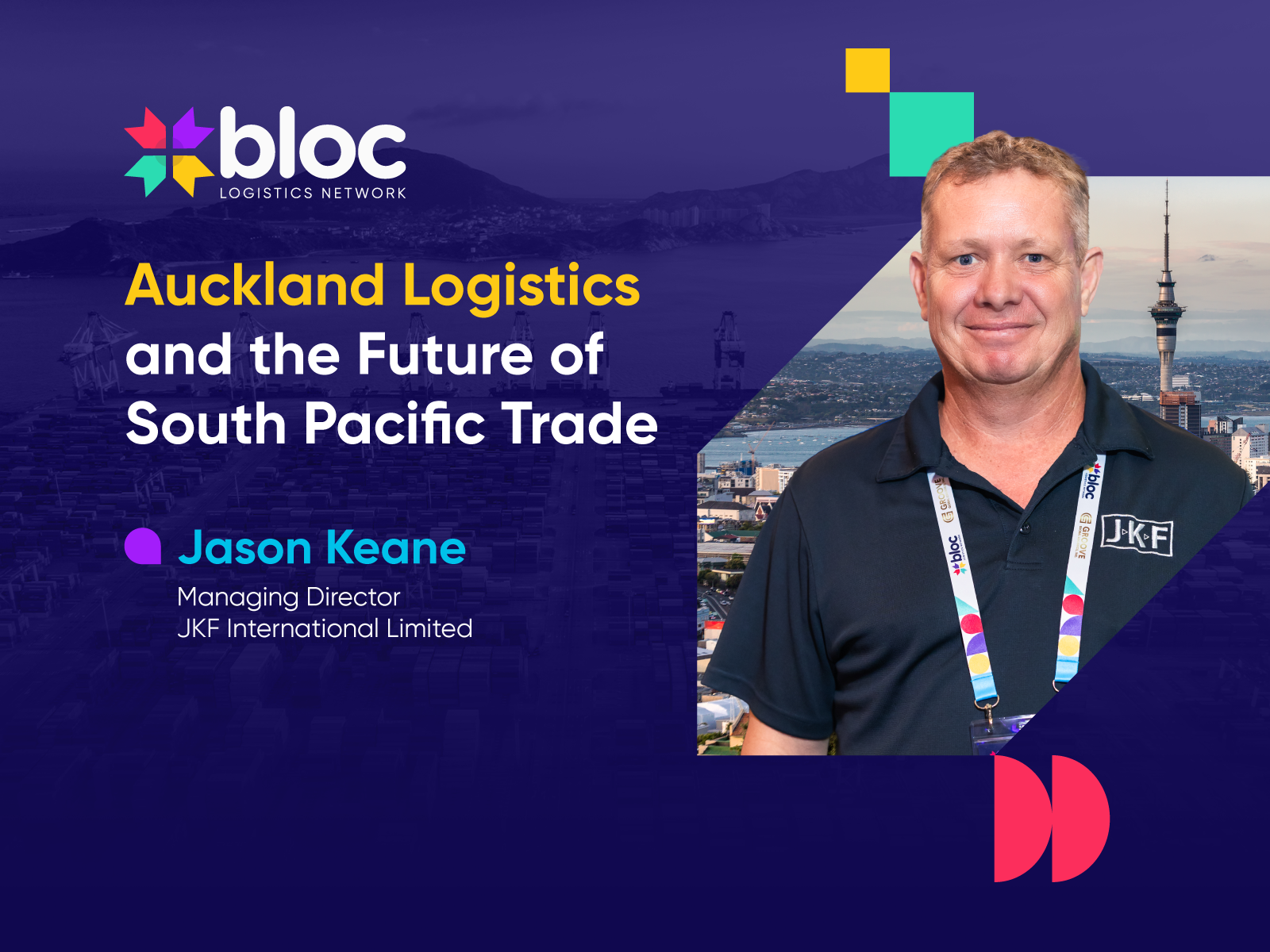
By Jason Keane, Managing Director of JKF International Limited
The global logistics landscape is undergoing a profound transformation. New Zealand, despite its geographical isolation at the edge of the world, finds itself at the heart of this evolution. As we navigate through 2025 and cast our gaze toward 2026, the traditional challenges of distance are being met with the burgeoning opportunities of digitalization, sustainability, and unparalleled local expertise.
In this exclusive deep dive, Jason from JKF International Limited shares his perspective on how Auckland is positioning itself as a resilient hub for the South Pacific. He explores why the “human element” remains the most critical asset in an increasingly automated industry and how New Zealand is rewriting the rulebook for island-nation trade.
The State of Play in Auckland Logistics
Auckland serves as the primary gateway for New Zealand’s international trade. With the Ports of Auckland acting as a vital maritime artery and the city’s proximity to major manufacturing and distribution hubs, it is undeniably the engine room of the nation’s economy. However, the last few years have taught the industry that being an engine room requires constant maintenance, strategic upgrades, and a high degree of adaptation.
“In the New Zealand market, we aren’t just fighting the clock; we are fighting the distance,” Jason explains. “Because we are at the end of many global shipping routes, any disruption in Singapore, Los Angeles, or Shanghai eventually ripples down to our shores. Being a thought leader in this space means moving from a reactive mindset to a predictive one. We can no longer afford to wait for the ship to appear on the horizon to start planning.”
Current market data supports this shift. The New Zealand freight and logistics market is projected to reach nearly USD 19 billion by 2026. This growth isn’t just a result of increased volume; it is being driven by a surge in value-added services. Importers and exporters are no longer looking for the cheapest way to move a box from Point A to Point B—they are looking for the most reliable way to secure their supply chain against a backdrop of global uncertainty.
Resilience Through Local Expertise: The "Just-in-Case" Shift
One of the standout trends for 2025 is the decisive move away from “Just-in-Time” logistics toward “Just-in-Case” strategies. For a country like New Zealand, which relies heavily on primary industry exports, such as dairy, meat, and horticulture, any delay in the cold chain or a lack of container availability can be catastrophic.
Jason emphasizes that local knowledge is the only true hedge against global volatility. “Multinational forwarders often try to apply a global template to a local problem. But Auckland has its own rhythm,” he notes. “We have specific labor cycles, local infrastructure projects like the ongoing rail renewals, and unique customs nuances that a centralized office in Europe or the US simply won’t grasp. At JKF International, we believe that being ‘on the ground’ means more than just having an office here, it means having the deep-seated relationships to get things moved when the standard channels are blocked.”
This sentiment is echoed across the industry. With e-commerce continuing to grow at double-digit rates in New Zealand, the pressure on last-mile delivery and warehousing in Auckland has reached an all-time high. The ability to pivot, finding alternative warehouse space or rerouting a shipment to the Port of Tauranga when Auckland faces congestion, is what separates a successful season from a logistical failure.
The Digital Frontier and the JKF Approach
Digitalization is no longer a futuristic buzzword; it is a prerequisite for survival. From AI-driven route optimization to blockchain-enabled transparency, the tools available to freight forwarders have never been more powerful. However, Jason warns against the “dehumanization” of the supply chain, advocating instead for a balanced approach.
“Technology should be the wind in our sails, not the captain of the ship,” says Jason. “We use data to provide our clients with 24/7 visibility, but when a vessel is delayed or a port is congested, a computer won’t solve the problem, a person will. Our clients in Auckland appreciate that they can call us and speak to someone who understands their specific business needs, not a chatbot in a different time zone.”
By integrating modern Warehouse Management Systems (WMS) with a dedicated, “hand-picked” team, JKF International manages to bridge the gap between high-tech efficiency and high-touch service. This hybrid model, leveraging predictive analytics to anticipate delays while maintaining a boots-on-the-ground presence to manage them, is what Jason believes will define the most successful forwarders in the coming years.
Sustainability: The New Competitive Edge
New Zealand has long marketed itself to the world as “Clean and Green,” and the logistics sector is finally catching up to this brand promise. The government’s “Aotearoa New Zealand Freight and Supply Chain Strategy” has set ambitious targets for decarbonization, aiming for a 41% reduction in transport emissions by 2035.
For exporters, particularly those shipping high-value goods to Europe and North America, carbon accounting is quickly becoming a trade requirement rather than a voluntary “nice-to-have.”
“We are seeing a massive shift in how our clients view their environmental footprint,” Jason notes. “It’s not just about doing the right thing anymore; it’s about market access. If you can’t prove the sustainability of your logistics chain, you might find yourself locked out of premium markets that demand carbon neutrality. Our role is to help clients navigate these new regulations.”
JKF International is working closely with partners to explore modal shifts, such as moving freight from road to rail where possible, and optimizing cargo consolidation. By ensuring that every kilometer traveled is as efficient as possible, they are helping New Zealand businesses maintain their competitive edge in a world that is increasingly sensitive to the carbon cost of “food miles.”
Navigating the Infrastructure Maze
Auckland’s infrastructure is currently in a state of flux, with massive investments aimed at future-proofing the city. The development of inland ports and the expansion of the “Golden Triangle” (the area between Auckland, Hamilton, and Tauranga) are critical components of this plan.
Jason points out that these developments are essential for New Zealand to remain a viable player in South Pacific trade. “As vessels get larger, our ports must adapt. But it’s not just about the water, it’s about the land-side logistics. We need seamless integration between the ship, the wharf, the truck, and the warehouse. Any bottleneck in that chain increases the cost for the consumer and decreases the profit for the producer.”
Looking Ahead to 2026
As we look toward the horizon of 2026, the outlook for New Zealand logistics remains optimistic but cautious. While global inflationary pressures and geopolitical tensions continue to cast a shadow, the fundamental demand for New Zealand’s premium exports remains robust. Export volumes for world-class food and fiber products are at record highs, and the long-term investment in Auckland’s infrastructure is finally beginning to bear fruit.
For Jason and the team at JKF International, the goal is clear: to provide a stable platform for New Zealand businesses to reach the world. By combining global reach through the Bloc Logistics Network with hyper-local expertise, they are proving that even a nation at the edge of the map can lead the way in logistics innovation.
Jason’s final thoughts for Bloc Logistics Network members and global partners are clear:
“The future of freight in New Zealand isn’t just about moving goods; it’s about moving information and building trust. Whether you are importing electronics or exporting world-class kiwifruit, your logistics partner is the guardian of your brand. In Auckland, JKF International is proud to be that guardian, ensuring that New Zealand remains connected, resilient, and ready for whatever the future of trade holds.”
Key Takeaways 2026:
- Proactive Planning: The shift from “Just-in-Time” to “Just-in-Case” requires higher inventory levels and smarter warehousing solutions.
- Sustainability as Currency: Carbon footprints will dictate market access in the EU and North America.
- The Hybrid Model: Success lies in combining AI and digital tracking with human intervention and local relationship management.
- Auckland as a Hub: Continued investment in the Auckland-Hamilton-Tauranga corridor will be the backbone of NZ trade growth.

Article by Jason Keane
Managing Director,
JKF International Limited, a member of Bloc Logistics Network
JKF International Limited is an Auckland-based international freight forwarder founded in 2014, handling air and sea shipments across all New Zealand ports. Known for hands-on service, each client works with a single dedicated contact across all shipment stages. Backed by experienced staff and carefully selected global partners, JKF focuses on reliability, strong relationships and consistent service that keeps importers and exporters coming back..
Bloc Logistics Network is a global platform that connects logistics professionals to share opportunities and collaborate without barriers. Bloc aims to level the playing field by creating an accessible, supportive environment where professionalism and collaboration drive real results. It serves as an ecosystem designed for mutual advancement, ensuring growth, efficiency, and success across the logistics industry.