

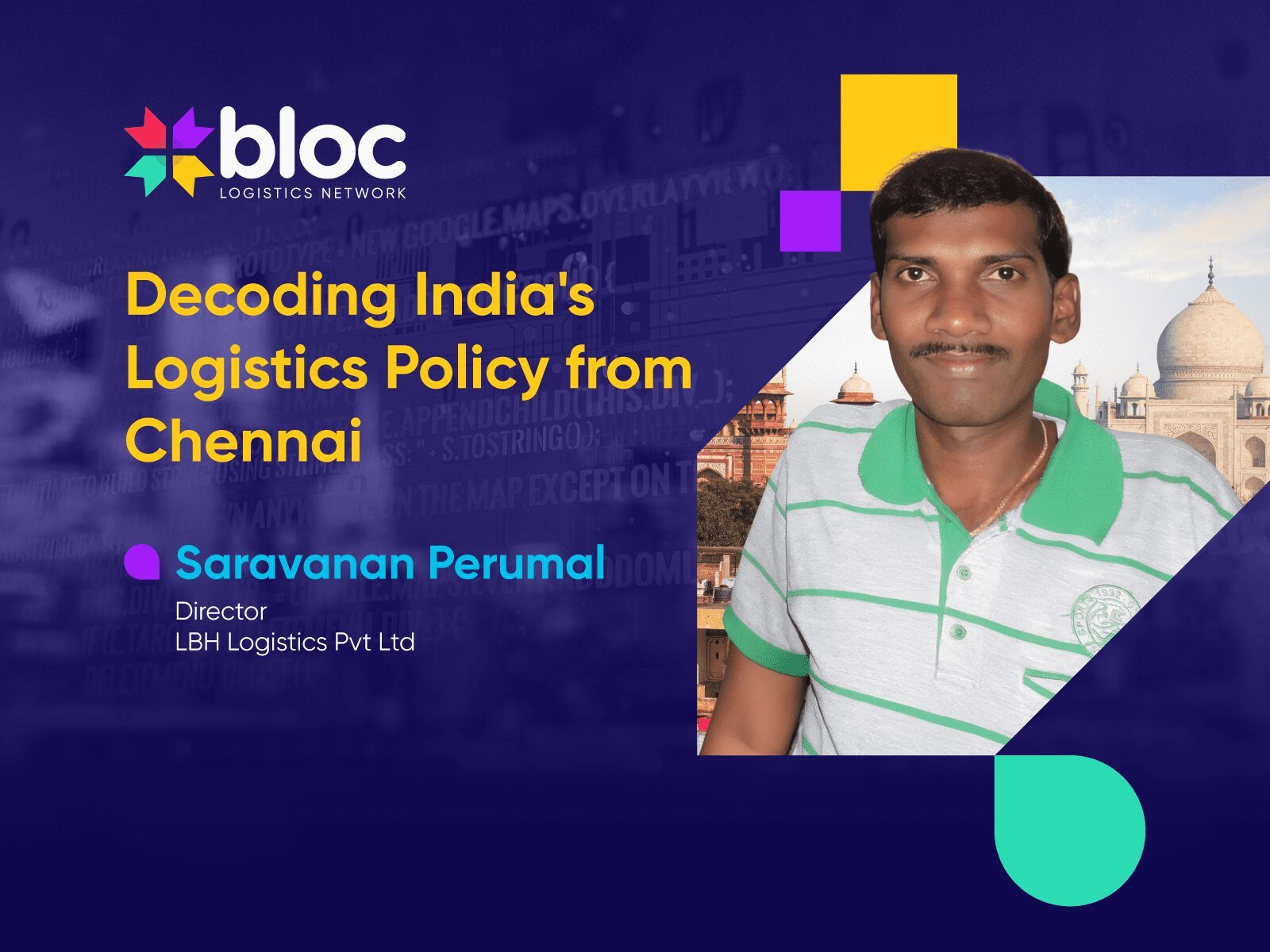
By Saravanan Perumal, Director of LBH Logistics Pvt Ltd
India, a nation on a trajectory to become a $5 trillion economy, has long recognized a critical hurdle in its path: logistics. Historically fragmented, costly, and complex, the country’s supply chain infrastructure has been a significant bottleneck to its manufacturing and trade ambitions.
However, a seismic shift is underway. With the introduction of the ambitious National Logistics Policy (NLP) and the powerful PM Gati Shakti master plan, India is fundamentally rewiring its approach to the movement of goods. This transformation isn’t just a federal initiative; it’s a ground-level revolution being felt most acutely in the nation’s key logistical nerve centers.
At the forefront of this change is Chennai, the vibrant capital of Tamil Nadu and the undisputed “Gateway to South India.”
For global freight forwarders and businesses looking to tap into India’s immense market, understanding the implications of the NLP through the lens of a pivotal hub like Chennai is crucial. We sat down with Saravanan, a seasoned logistics expert from LBH Logistics Pvt Ltd in Chennai, to get an on-the-ground perspective on how these policies are creating unprecedented opportunities and why a local expert is more valuable than ever.
The Grand Vision: Deconstructing India’s Logistics Overhaul
For decades, logistics in India was characterized by high costs—hovering between 13-14% of the GDP, compared to a global average of 8%—and systemic inefficiencies. A heavy reliance on road transport, cumbersome paperwork, and a lack of integration between different modes of transport created delays and uncertainty. The National Logistics Policy was conceived to tackle these issues head-on.
Its primary goals are clear and ambitious:
1. Reduce the cost of logistics in India to be comparable to global benchmarks by 2030.
2. Improve the country’s ranking in the Logistics Performance Index to be among the top 25 nations.
3. Create a data-driven decision support system for an efficient logistics ecosystem.
To achieve this, the policy rests on several key pillars, most notably the integration of digital systems and the development of multi-modal infrastructure. As Saravanan explains, this represents a fundamental change in mindset.
“For years, Indian logistics was a complex puzzle with missing pieces. The National Logistics Policy isn’t just about adding new pieces; it’s about creating a unified board where everything connects seamlessly,” says Saravanan. “We are moving from isolated efficiency, where a single port or road might be good, to systemic, nationwide performance. The focus is on the entire journey of the cargo, not just individual legs of it.”
A cornerstone of this digital push is the Unified Logistics Interface Platform (ULIP), designed to bring all digital services from various ministries—including road transport, railways, customs, and aviation—into a single portal. For freight forwarders, this means a move away from opaque, multi-platform processes towards a single source of truth, enhancing visibility and streamlining operations.
Chennai’s Strategic Position in the New Logistics Landscape
While the NLP is a nationwide policy, its success hinges on the capabilities of its major logistics hubs. In this context, Chennai’s role cannot be overstated. With three major ports (Chennai Port, Kamarajar Port at Ennore, and Kattupalli Port), a major international airport, and robust road and rail connectivity, the Chennai region is a natural focal point for the policy’s implementation.
The city is the heart of India’s automotive industry, a major center for electronics manufacturing, a hub for textiles and garments, and a critical node in the country’s pharmaceutical supply chain. This diverse industrial base provides the cargo volume that justifies massive infrastructure investment.
“Chennai is not just a port; it’s an ecosystem,” Saravanan emphasizes. “We have the manufacturing muscle of the automotive and electronics sectors, which demand just-in-time precision, combined with world-class port infrastructure. Under the new policy, this ecosystem is becoming supercharged. Multi-Modal Logistics Parks (MMLPs) being developed near Chennai will integrate storage, value-added services, and seamless connectivity between rail, road, and sea. This makes the region the most logical and efficient entry and exit point for goods in South India.”
Furthermore, Chennai is a key node in major industrial corridors, such as the Chennai-Bengaluru Industrial Corridor (CBIC) and the East Coast Economic Corridor. These projects, which fall under the umbrella of the PM Gati Shakti plan, are focused on creating seamless multi-modal connectivity between industrial zones and gateways. For businesses manufacturing in India’s southern states, this means faster and more reliable access to global markets through Chennai’s ports.
On-the-Ground Impact: Tangible Opportunities for Freight Forwarders
For Bloc Logistics Network members and their clients, these high-level policies translate into tangible, real-world benefits. The theoretical goals of the NLP are already starting to manifest as practical advantages for those moving cargo through Chennai.
1. Drastically Improved Turnaround Times: Port congestion and yard delays have long been a challenge. The NLP’s emphasis on digitalization and multi-modal transport directly addresses this. The implementation of port community systems and digital document submission is reducing paperwork-related delays. More importantly, the development of MMLPs and dedicated freight corridors means cargo can be evacuated from the port area much faster via rail, freeing up container yard space and reducing truck congestion at the gates. This results in quicker vessel turnarounds and faster delivery to the hinterland.
2. Unprecedented Transparency and Cargo Visibility: The ULIP platform is a game-changer for international partners. In the past, tracking a container once it left the port was a difficult task involving multiple follow-ups.
“The biggest change for our international partners is the drastic reduction in uncertainty,” Saravanan notes. “Before, you might have a dozen different touchpoints and paper trails to track a single shipment. Now, with digital integration through platforms like ULIP, we can offer our partners end-to-end visibility from the vessel to the factory floor. It’s a massive step towards predictability and reliability, which is the currency of our industry.”
3. Cost Efficiency Through Modal Shift: India’s over-reliance on road transport has been a primary driver of high logistics costs and emissions. The NLP aggressively promotes a shift towards rail and coastal shipping. For bulk and heavy cargo moving to and from Chennai’s hinterland, rail transport offers significant cost savings and environmental benefits. As a local forwarder, LBH Logistics can advise on the most cost-effective and efficient modal mix for any given shipment, leveraging the newly strengthened rail networks connected to Chennai’s ports.
4. Access to a Deep and Connected Hinterland: The strengthening of infrastructure means that Chennai now serves a much larger and more accessible hinterland. Industrial clusters in Tamil Nadu, Andhra Pradesh, Karnataka, and even parts of Maharashtra are now more efficiently connected to Chennai than ever before. This opens up new sourcing and manufacturing opportunities for global companies, who can rely on a single, efficient gateway to serve a vast region.
The Indispensable Role of a Local Expert
While the vision of the National Logistics Policy is transformative, its implementation is a complex and ongoing process. Grand infrastructure projects take time, digital platforms require user adoption, and old habits can be slow to change. Navigating this period of transition presents its own set of challenges—from understanding new customs regulations to coordinating with multiple stakeholders in a rapidly evolving ecosystem.
This is where the value of a deeply entrenched local partner becomes paramount. A forwarder like LBH Logistics doesn’t just see the policy on paper; they live its daily implementation. They understand the specific operational procedures at each of Chennai’s three ports, they have long-standing relationships with customs officials and transport operators, and they can anticipate potential bottlenecks before they become costly problems.
“A policy on paper is one thing; navigating its implementation on the ground is another,” Saravanan concludes. “Which terminal is currently most efficient for a specific cargo type? What is the fastest route to the new MMLP? How do you best utilize the new digital platforms to avoid documentation errors? These are not questions you can answer from a distance. Having a local partner who understands these nuances is no longer just a convenience—it’s a critical component for success in the new Indian landscape.”

Article by Saravanan Perumal
Director,
LBH Logistics Pvt Ltd
LBH Logistics is a process-driven logistics provider based in Bangalore, India, with a global footprint. Known for reliable and efficient freight solutions, they offer air, sea and road transport, customs clearance, warehousing and project cargo handling. With access to major world ports and expertise in handling perishables, pharma and dangerous goods, LBH delivers smooth, end-to-end logistics experiences backed by professionalism and global reach.