

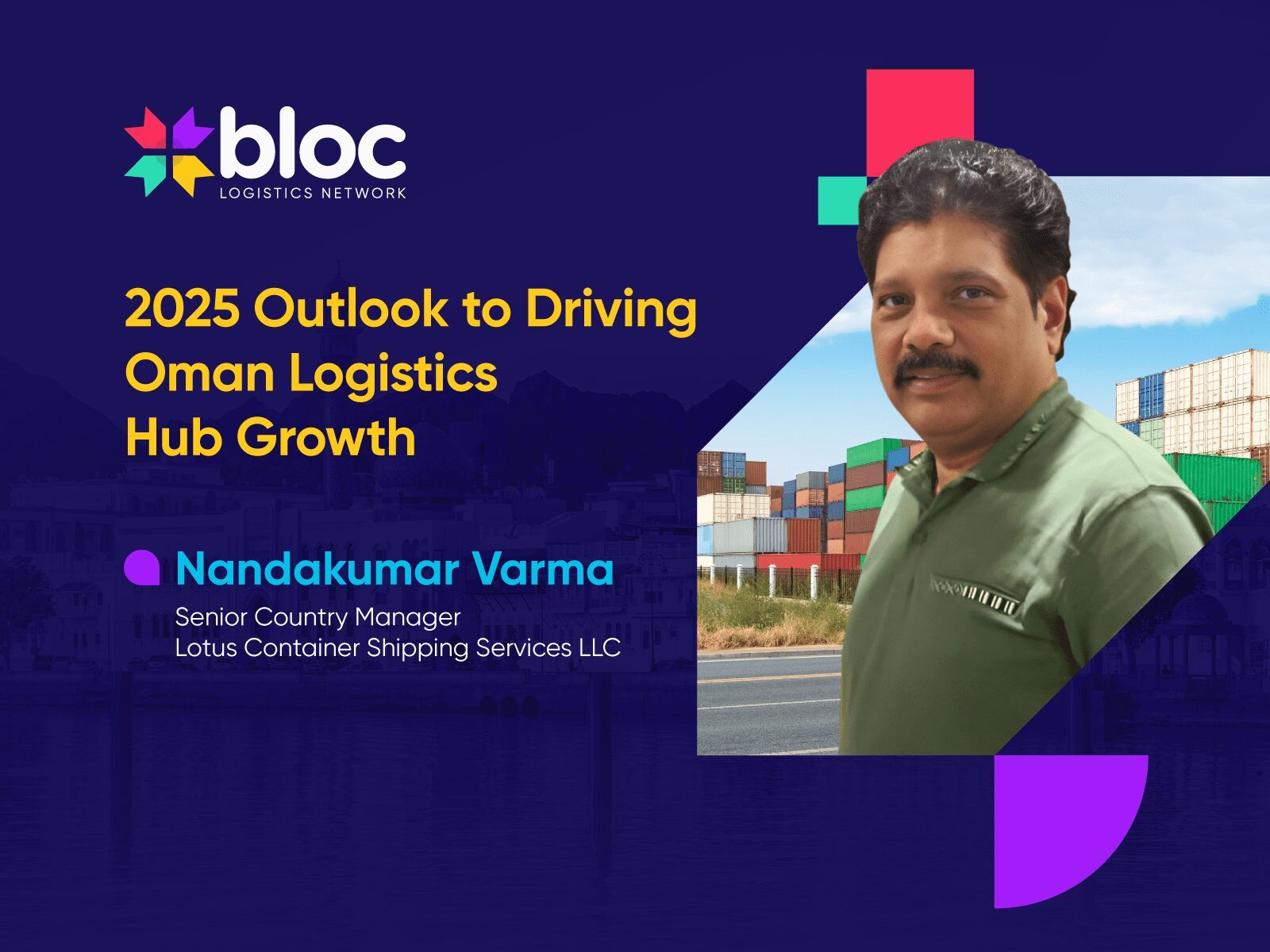
By Nandakumar Varma, Senior Country Manager, Lotus Container Shipping Services LLC, Oman
The Sultanate of Oman has positioned itself as a critical node in global trade networks through calculated infrastructure investments and strategic geographic advantages. The country’s transformation into a regional logistics powerhouse represents a significant shift in Middle Eastern commerce patterns, creating new opportunities for freight forwarders and logistics professionals across international markets.
Oman’s location at the mouth of the Strait of Hormuz provides unparalleled access to major shipping lanes connecting Asia, Europe, and Africa. This geographic positioning allows the country to serve as a natural transshipment point for cargo moving between continents. The government has recognized this advantage and implemented comprehensive development programs to maximize its logistics potential.
Oman Logistics Hub Growth Through Infrastructure Development
The country’s infrastructure expansion has been systematic and substantial. Port Sultan Qaboos and the newer Sohar Port have undergone significant capacity expansions, with Sohar Port now handling over 30 million tons of cargo annually. These facilities feature state-of-the-art container handling equipment and deep-water berths capable of accommodating the largest commercial vessels.
Rail connectivity represents another crucial component of Oman’s logistics strategy. The planned railway network will connect major ports with inland distribution centers and neighboring countries, creating seamless multimodal transportation corridors. This rail infrastructure will reduce transportation costs and transit times for goods moving through the region.
Air cargo capabilities have also expanded considerably. Muscat International Airport has increased its cargo handling capacity while new specialized cargo facilities are being developed at strategic locations. These improvements support time-sensitive shipments and high-value goods requiring rapid transportation solutions.
Economic Diversification Drives Network Global Logistics Demand
Oman’s economic diversification initiatives have created increased demand for sophisticated logistics services. The country is actively developing manufacturing, tourism, and technology sectors beyond its traditional oil-based economy. This diversification requires more complex supply chain solutions and creates opportunities for freight forwarders to provide specialized services.
Manufacturing zones established in Sohar, Salalah, and other locations require integrated logistics support for both inbound raw materials and outbound finished products. These industrial clusters generate consistent cargo volumes and create stable business opportunities for logistics providers operating in the region.
The growth of the e-commerce and retail sectors, in turn, has led to increased demand for last-mile delivery services and warehousing solutions. Consequently, consumer goods imports have risen significantly, necessitating efficient distribution networks to support Oman’s growing population and expanding retail market.
Strategic Advantages for Oman Logistics Hub Growth
Regional trade agreements and free trade zones provide additional competitive advantages for logistics operations based in Oman. The country has established favorable trade relationships with major economies and offers simplified customs procedures for goods in transit. These policy frameworks reduce administrative burdens and accelerate cargo processing times.
Free zones in Sohar, Salalah, and Muscat offer attractive incentives for international companies establishing regional operations. These zones provide 100% foreign ownership, tax exemptions, and streamlined business registration processes. Logistics companies can leverage these benefits to establish cost-effective regional distribution centers.
Currency stability and political continuity in Oman provide predictable business environments for long-term logistics investments. The Omani Rial maintains a stable exchange rate, reducing financial risks associated with multi-currency transactions common in international freight forwarding operations.
Market Entry Strategies for Network Global Logistics Operations
To successfully enter the market in Oman, it is essential to begin by understanding local business practices and regulatory requirements.
Following this, forming partnerships with established local companies can offer valuable market insights and significantly facilitate business development. Ultimately, these partnerships often prove to be more effective than attempting market entry independently.
Regulatory compliance represents a critical consideration for freight forwarders entering the Omani market. Import and export procedures require proper documentation and adherence to specific requirements for different commodity types. Understanding these regulations prevents delays and ensures smooth operations.
Local talent development supports sustainable business growth in Oman’s logistics sector. The government emphasizes Oman growth policies that encourage employment of local nationals. Companies that invest in training and developing Omani staff often find greater long-term success and regulatory support.
Technology Integration in Oman Logistics Hub Growth
Digital transformation initiatives are reshaping logistics operations throughout Oman. Government agencies have implemented electronic documentation systems that reduce paperwork and processing times. These digital platforms integrate with international trade systems, creating smoother cross-border transactions.
Automated cargo handling systems at major ports increase efficiency and reduce operational costs. These technologies enable faster vessel turnaround times and improved cargo tracking capabilities. Freight forwarders can leverage these systems to provide better service to their customers.
Supply chain visibility tools are becoming standard requirements for logistics operations in Oman. Customers expect real-time tracking information and proactive communication about shipment status. Companies that invest in these technologies gain competitive advantages in the market.
Future Outlook for Network Global Logistics in Oman
Long-term development plans indicate continued growth in Oman’s logistics sector. The National Logistics Strategy 2040 outlines ambitious targets for cargo handling capacity and regional connectivity. These plans include additional port expansions, rail network completion, and enhanced air cargo facilities.
Regional trade growth projections suggest increasing cargo volumes through Omani ports and logistics facilities. Population growth in neighboring countries creates expanding markets for consumer goods and industrial products. This growth translates directly into increased demand for freight forwarding and logistics services.
Investment in renewable energy and sustainable logistics practices aligns with global trends toward environmental responsibility. Companies that adopt green logistics practices early may gain advantages as environmental regulations become more stringent and customers prioritize sustainable supply chains.
The combination of strategic location, infrastructure investment, and supportive government policies positions Oman as a major player in regional and global logistics networks. Freight forwarders and logistics professionals who understand these market dynamics can capitalize on the significant opportunities presented by Oman’s continued development as a logistics hub.
Organizations like Bloc Logistics Network demonstrate the power of structured collaboration within the logistics industry. By providing a framework for connection, these networks help independent companies compete effectively against much larger organizations while maintaining their unique identities and strengths.

Article by Nandakumar Varma
Senior Country Manager, Lotus Container Shipping Services LLC, a member of Bloc Logistics Network
Lotus Shipping Services LLC is a top Oman-based NVOCC and freight forwarder offering flexible, end-to-end logistics solutions across air, sea, and land, backed by a strong global network and local expertise.
Bloc Logistics Network is a global platform that connects logistics professionals to share opportunities and collaborate without barriers. Bloc aims to level the playing field by creating an accessible, supportive environment where professionalism and collaboration drive real results. It serves as an ecosystem designed for mutual advancement, ensuring growth, efficiency, and success across the logistics industry.