

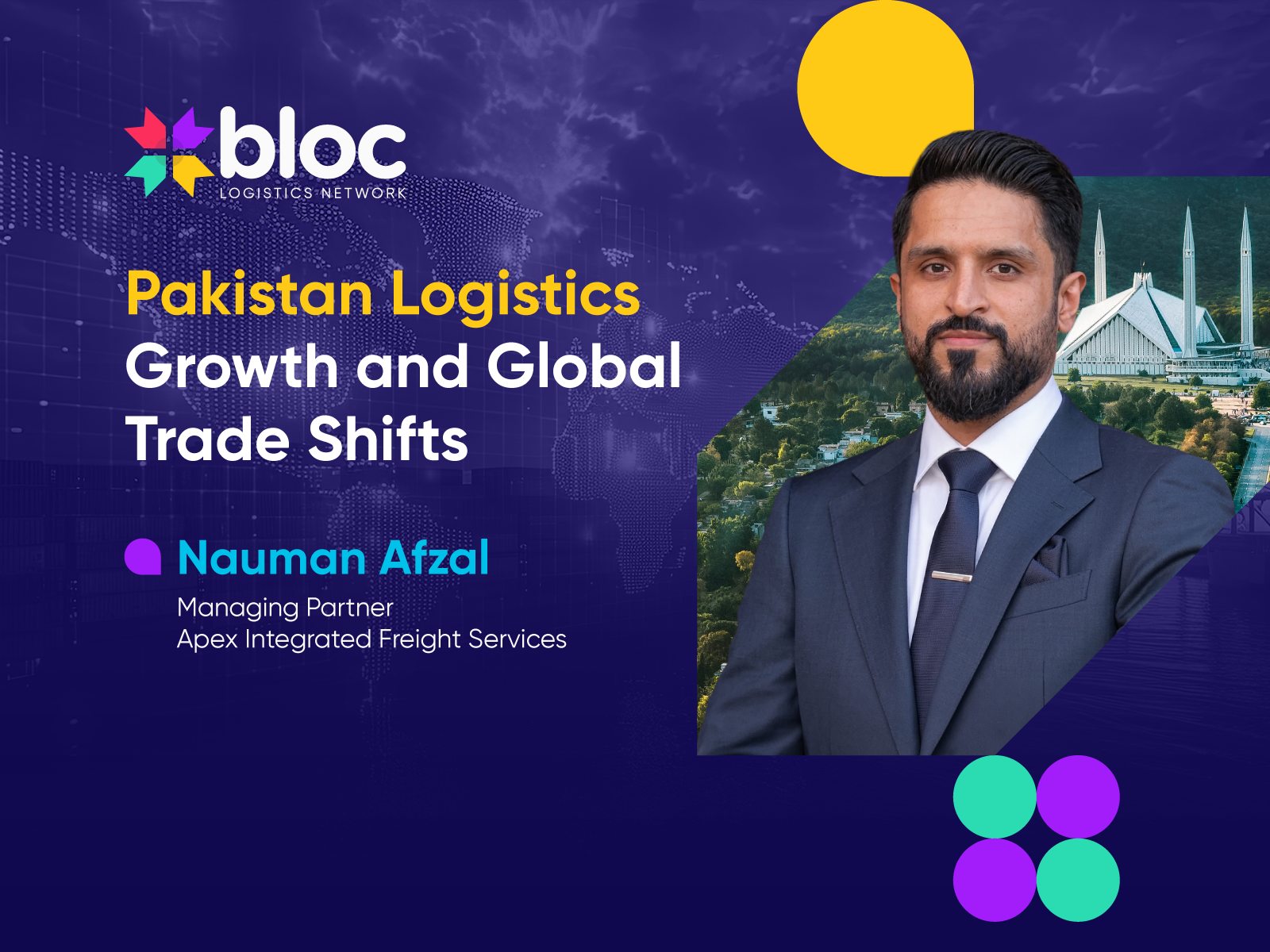
By Nauman Afzal, Managing Partner, Apex Integrated Freight Services
Every year brings new conversations about where the logistics industry is heading.
Some changes arrive quickly. Others happen gradually until you look back and realise the way you operate today is very different from a few years ago.
That has certainly been the case in Pakistan.
Working with customers across Karachi, Lahore, Islamabad, Sialkot, Multan, and Peshawar has given us a front-row seat to those changes. Every region has its own industries, supply chains, and transport requirements, but there are clear patterns emerging across the country that continue to shape how freight forwarders support their customers.
For us at Apex Integrated Freight Services, those changes have reinforced one important lesson. Logistics is becoming more connected, more transparent, and more demanding.
Customers expect more visibility, greater flexibility, and solutions that help them navigate an increasingly complex trading environment.
Customer Expectations Have Changed
The biggest change I have noticed isn’t a new transport route or another technology platform.
It’s what customers now expect from their logistics partner.
Moving cargo safely and on time will always be the foundation of our business, but today our customers also expect timely updates, accurate documentation, proactive communication, and complete visibility throughout the shipment.
Many businesses are managing leaner inventories and tighter production schedules than ever before. A delayed update can be just as disruptive as a delayed shipment.
That has changed the role of freight forwarders.
Our responsibility now extends beyond arranging transport. We are expected to help customers make informed decisions throughout the supply chain, anticipate potential disruptions, and respond quickly when circumstances change.
Pakistan's Trade Environment Continues to Change
Pakistan’s logistics sector has changed significantly over the past few years.
Investments in infrastructure, industrial development, and improved transport corridors have created new opportunities for businesses trading within Pakistan and with international markets.
One of the most noticeable developments has been the continued growth of the China-Pakistan Economic Corridor (CPEC). As industrial zones continue to develop and manufacturing activity expands, freight forwarders are supporting a growing number of businesses moving cargo into and out of these areas.
With offices across Pakistan’s major commercial centres, we see these developments from different perspectives every day.
Manufacturers are expanding into new markets. Importers are diversifying their supply chains. Exporters are looking for reliable logistics partners that understand both local operations and international trade requirements.
Each of these changes creates new opportunities, but they also require careful planning and close coordination throughout the supply chain.
Growth Also Brings New Challenges
As cargo volumes increase, expectations continue to rise.
Warehousing, inventory management, specialised storage, and cold chain capabilities have become increasingly important, particularly for industries such as agriculture, pharmaceuticals, and food products where handling requirements leave little room for error.
Infrastructure continues to improve, but logistics depends on much more than roads and ports.
Reliable operations come from strong planning, clear communication, and well-managed processes that connect every stage of the shipment.
At Apex Integrated Freight Services, we continue investing in systems that help customers gain greater visibility across their supply chains while improving operational efficiency behind the scenes.
Technology certainly plays an important role, but successful logistics still depends on understanding the practical realities of moving cargo throughout Pakistan every day.
Technology Is Changing the Way We Work
The way customers interact with freight forwarders has changed considerably.
Five or ten years ago, customers often called to ask where their shipment was.
Today, they expect that information to be available immediately.
That expectation has encouraged logistics providers to invest in better systems, improved shipment visibility, and digital tools that make communication faster and more transparent.
We have seen the benefits ourselves.
Digital platforms allow our team to respond more quickly, reduce manual processes, minimise the risk of errors, and provide customers with more accurate information throughout the shipment lifecycle.
Technology continues to improve how we operate, but it works best when it supports experienced people rather than replacing them.
Local Knowledge Still Makes the Difference
Every country has its own way of doing business.
Pakistan is no different.
Customs procedures, documentation requirements, local regulations, and operational conditions all require practical experience that cannot be learned from software alone.
When unexpected situations arise, whether at a port, border crossing, or customer facility, local knowledge often becomes the deciding factor in finding the right solution.
That experience comes from working in the market every day, understanding how different regions operate, and building strong relationships throughout the logistics community.
Those relationships remain one of the most valuable assets any freight forwarder can have.
Continuing to Move Forward
Pakistan’s logistics continues to develop alongside changing trade patterns, growing industrial activity, and rising customer expectations.
Every improvement in infrastructure creates new possibilities. Every advancement in technology gives customers better visibility. Every new trade opportunity brings fresh challenges for logistics providers to solve.
For our team at Apex Integrated Freight Services, the focus remains the same.
We will continue investing in our people, strengthening our operations, and helping customers navigate an increasingly connected supply chain with confidence.
The logistics industry never stands still, and neither do we.

Article by Nauman Afzal
Apex Integrated Freight Services, a member of Bloc Logistics Network
is a Pakistan-based international freight forwarder providing reliable air, sea and multimodal logistics solutions. With offices in Lahore, Multan, Islamabad, Karachi and Sialkot, the company delivers efficient cargo handling, customs clearance and door-to-door services. Backed by strong operational expertise and responsive communication, Apex is committed to building trusted global partnerships through competitive pricing, dependable service and long-term collaboration.
Bloc Logistics Network is a global platform that connects logistics professionals to share opportunities and collaborate without barriers. Bloc aims to level the playing field by creating an accessible, supportive environment where professionalism and collaboration drive real results. It serves as an ecosystem designed for mutual advancement, ensuring growth, efficiency, and success across the logistics industry.