

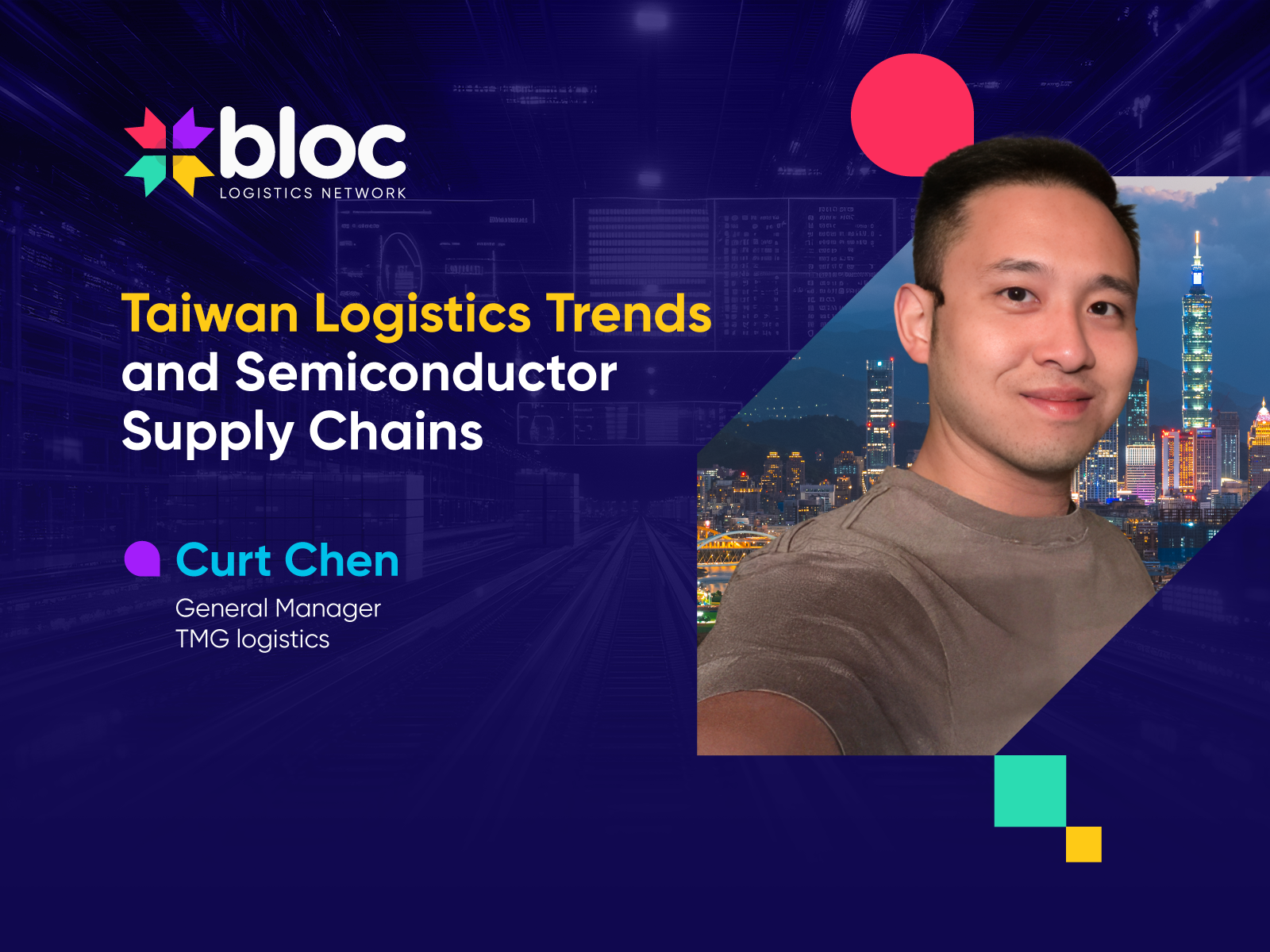
By Curt Chen, General Manager of TMG Logistics Group
In the heart of the Asia-Pacific region, Taiwan stands as a critical linchpin in the global supply chain. As we move through 2026, the logistics landscape in Taipei and across the island is undergoing a profound transformation. Driven by the relentless demand for semiconductors, a shift toward “green” shipping, and the integration of AI-driven logistics, Taiwan is no longer just a transit point, it is a sophisticated hub of high-tech distribution.
For freight forwarders and global partners, understanding the nuances of the Taiwanese market is essential. To provide a deep dive into these trends, we sat down with Curt from TMG Logistics Co Ltd, a leading expert in the Taipei logistics sector, to discuss how businesses can navigate the complexities of this evolving market.
The Semiconductor Surge and Specialized Cold Chain
Taiwan’s dominance in the semiconductor industry is the single most significant driver of its logistics requirements. As global industries from automotive to consumer electronics demand more advanced chips, the logistics supporting this sector must be flawless. This isn’t just about moving boxes; it’s about high-value, time-sensitive, and environment-controlled transport.
“The precision required for semiconductor logistics is unmatched,” Curt explains. “In Taipei, we aren’t just managing freight; we are managing the heartbeat of global technology. Every hour of delay in a chip shipment can have a million-dollar ripple effect across the globe. Our focus at TMG Logistics has always been on creating a ‘zero-fail’ environment for these high-precision components.”
The demand for specialized handling has led to a massive investment in temperature-controlled warehousing and vibration-sensitive transport solutions. Forwarders who want to succeed in the Taiwan trade lane must offer more than just space on a plane; they must offer technical expertise and specialized equipment.
Green Logistics and Sustainability in the Taiwan Strait
Sustainability is no longer a corporate buzzword in Taiwan; it is a regulatory and operational reality. With the Taiwanese government’s commitment to net-zero emissions by 2050, the logistics sector is under pressure to decarbonize. This includes the adoption of electric delivery fleets, the implementation of “Green Port” initiatives in Kaohsiung and Keelung, and a shift toward sustainable aviation fuel (SAF).
Curt notes that clients are increasingly asking for carbon footprint reporting as part of their standard RFQs. “Sustainability is now a core metric of performance. We are seeing a significant shift where our partners in Europe and North America prioritize ‘green’ routes. In Taipei, we are responding by optimizing route planning to reduce emissions and partnering with carriers that prioritize eco-friendly vessels.”
For global members of the Bloc Logistics Network, partnering with a Taiwan-based expert who understands these local environmental regulations is crucial for maintaining compliance and meeting the ESG goals of international shippers.
The Digital Transformation of Taipei Freight Forwarding
Digitalization is the third pillar of the modern Taiwanese logistics strategy. The integration of the Internet of Things (IoT) for real-time tracking, AI for predictive analytics, and blockchain for secure documentation is streamlining operations in Taipei’s busy ports and airports.
The “Smart Port” initiative at the Port of Kaohsiung is a prime example. By using automated stacking cranes and AI-driven traffic management, the port has significantly reduced turnaround times. However, technology is only as good as the people managing it.
“Technology is a tool, not a replacement for local expertise,” Curt says. “While we use advanced tracking systems to give our clients visibility, the true value comes from our ability to interpret that data. When a typhoon approaches or a port becomes congested, our digital tools tell us what’s happening, but our experience tells us how to fix it before the client even feels the impact.”
Resilient Supply Chains Amid Global Uncertainty
The geopolitical climate and the lessons learned from recent global disruptions have made “resilience” the top priority for 2026. Companies are moving away from “Just-in-Time” inventory models toward “Just-in-Case” strategies. This has led to an increased demand for warehousing space in Taiwan as businesses seek to buffer their stock against potential supply chain shocks.
Taiwan’s strategic location makes it an ideal spot for regional distribution centers (RDCs). By holding stock in Taipei, companies can quickly pivot to markets in Southeast Asia, Japan, or the United States.
“We are seeing a trend of ‘China Plus One’ strategies where Taiwan plays a pivotal role,” Curt observes. “Businesses are diversifying their manufacturing bases, and Taiwan offers the stability, infrastructure, and skilled workforce that these high-value supply chains require. At TMG Logistics, we act as the bridge that ensures these complex, multi-country movements remain seamless.”
Air Freight vs. Ocean Freight: The Current Balance
While ocean freight remains the backbone of global trade, Taiwan’s air freight sector—centered around Taoyuan International Airport—is seeing record volumes. This is largely due to the “high-value, low-weight” nature of electronics and medical devices.
However, the volatility of air freight rates remains a challenge. Curt emphasizes the importance of long-term planning and flexible routing. “The days of booking a week in advance are over for high-demand lanes. We encourage our partners to look at sea-air hybrid solutions when time allows, or to secure block space agreements to ensure capacity during peak seasons.”
Why Local Expertise Matters in the Taiwan Market
Navigating the customs regulations, local business culture, and language nuances in Taiwan can be daunting for outside firms. This is where the value of a Bloc Logistics Network membership truly shines. Having a trusted, local partner like TMG Logistics ensures that shipments don’t get stuck in “administrative limbo.”
“Local knowledge is the secret sauce of logistics,” says Curt. “Knowing which terminal at the port is running smoothly today, or having the personal relationship with customs officials to resolve a documentation discrepancy quickly, makes all the difference. We treat every shipment for a Bloc member as if it were our own, because in a network, our reputation is built on the success of our partners.”
Strategic Advice for 2026
As we look toward the remainder of 2026, the advice for freight forwarders looking to enter or expand in the Taiwan market is clear: focus on specialization, embrace digital visibility, and prioritize sustainability.
- Specialization: Don’t just be a generalist. Understand the specific requirements of the semiconductor, healthcare, or green energy sectors.
- Visibility: Provide clients with end-to-end transparency. In a fast-moving market like Taipei, information is just as valuable as the cargo itself.
- Partnership: Align with local experts who have deep roots in the community.
“The future of logistics in Taiwan is bright, but it is also complex,” Curt concludes. “At TMG Logistics, we are proud to be the eyes and ears for our Bloc Logistics Network partners on the ground here in Taipei. Together, we can turn these industry challenges into competitive advantages for our clients.”
Conclusion
Taiwan continues to punch above its weight in the global logistics arena. From its vital role in the tech sector to its leadership in green shipping, the island is a microcosm of the future of global trade. By leveraging the insights and local expertise of thought leaders like Curt and the team at TMG Logistics Co Ltd, members of the Bloc Logistics Network are well-positioned to navigate this dynamic market.
Whether you are moving sensitive electronics, perishable goods, or heavy machinery, the key to success in Taiwan lies in a blend of high-tech solutions and high-touch local service. As the world becomes more connected yet more complex, having a partner in Taipei who understands the “why” behind the “how” is more important than ever.

Article by Curt Chen
General Manager,
TMG Logistics Group
TMG Logistics Co Ltd is a Taipei-based freight forwarder providing international logistics services across Asia and global trade lanes. The company manages air and ocean freight, customs clearance, warehousing, and specialized cargo including project, pharmaceutical, and dangerous goods shipments. Through global partners, TMG Logistics supports clients with coordinated transport solutions across 75 countries..