

By Yefri Rodriguez, President, Altia Solutions
A charter project can look straightforward once the aircraft is booked. The harder part is everything that has to happen before the cargo reaches the main deck.
For Altia Solutions, that meant coordinating nearly 300 tonnes of refinery cargo across three U.S. gateways, three dedicated freighter flights, and a delivery schedule that left very little room for delay.
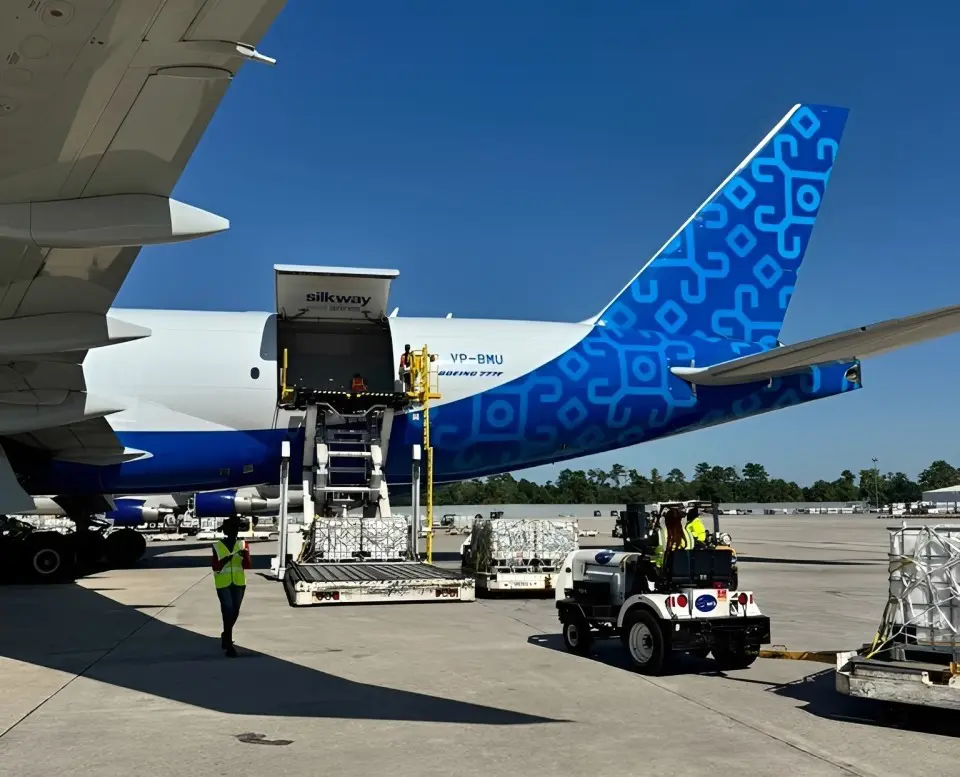
The cargo was urgently required in Abu Dhabi to support ongoing refinery operations. Each flight carried around 100 IBCs and 97,000 kg, departing from Houston, Dallas Fort Worth and Miami on one B747F and two B777F aircraft.
The main challenge was not finding lift. It was keeping trucking, security screening, ground handling and aircraft timing aligned across all three departures so the cargo could move within the required schedule.
That is where this project really begins.
Three U.S. Air Charter Flights for One Abu Dhabi Project
All three flights formed part of the same project.
The cargo consisted of LP111, a non-hazardous chemical product used by refineries, transported in IBCs and required urgently in Abu Dhabi.
Rather than moving everything through a single gateway, Altia coordinated departures from Houston George Bush Intercontinental Airport (IAH), Dallas Fort Worth International Airport (DFW), and Miami International Airport (MIA).
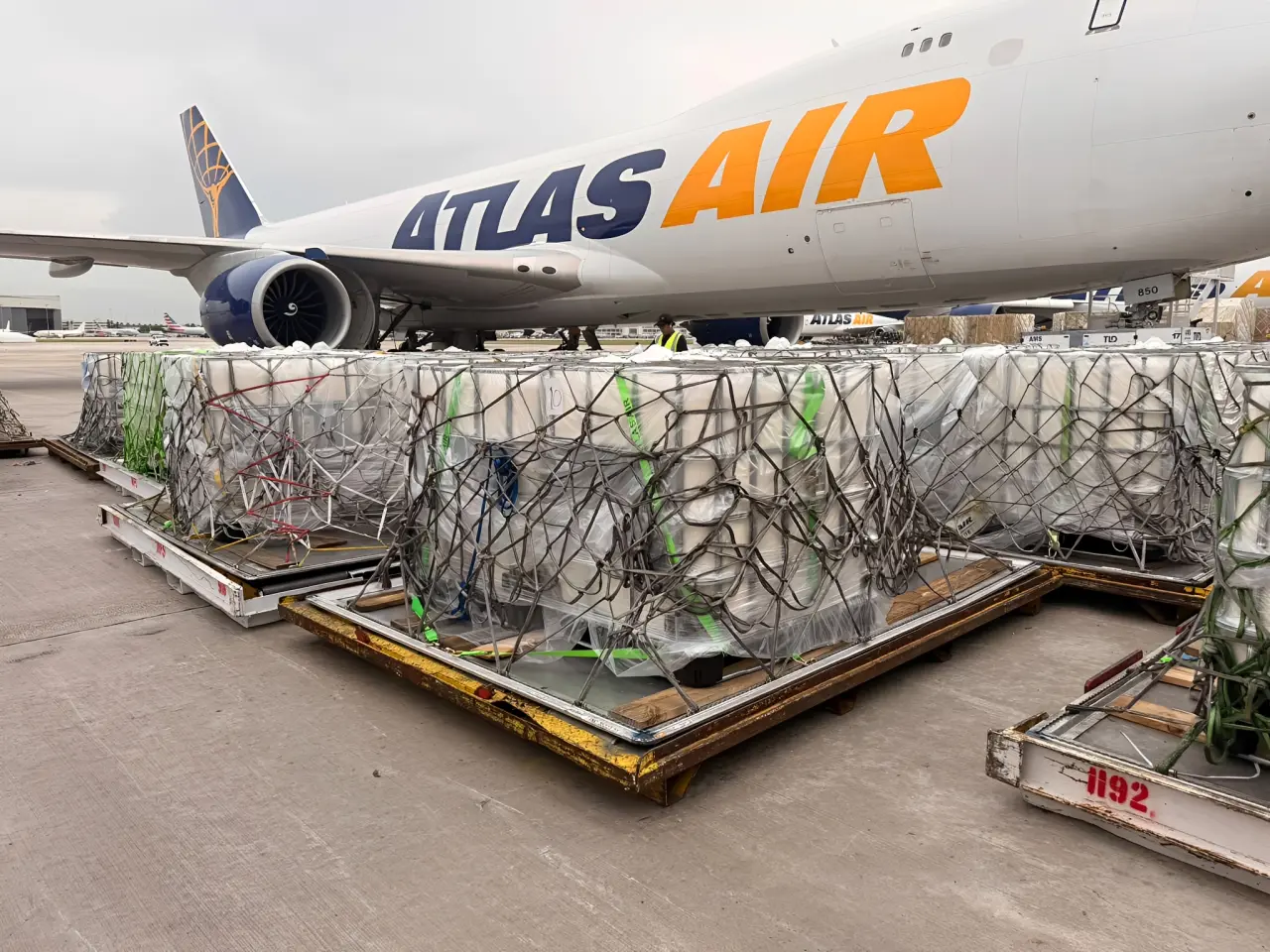
Each movement had its own trucking arrangements, screening requirements, ground handling activity and aircraft schedule, but all three flights were working toward the same delivery target.
Across the project, approximately 300 IBCs and 291,000 kg of cargo were moved from the United States to Abu Dhabi.
The scale of the job was significant, but the time pressure was what shaped the operation.
The product was needed to support ongoing refinery activity, so extending the programme over a longer series of movements was not an attractive option. Dedicated freighter capacity allowed Altia to move the required volume within the customer’s schedule.
Security Screening Became the Main Ground Challenge
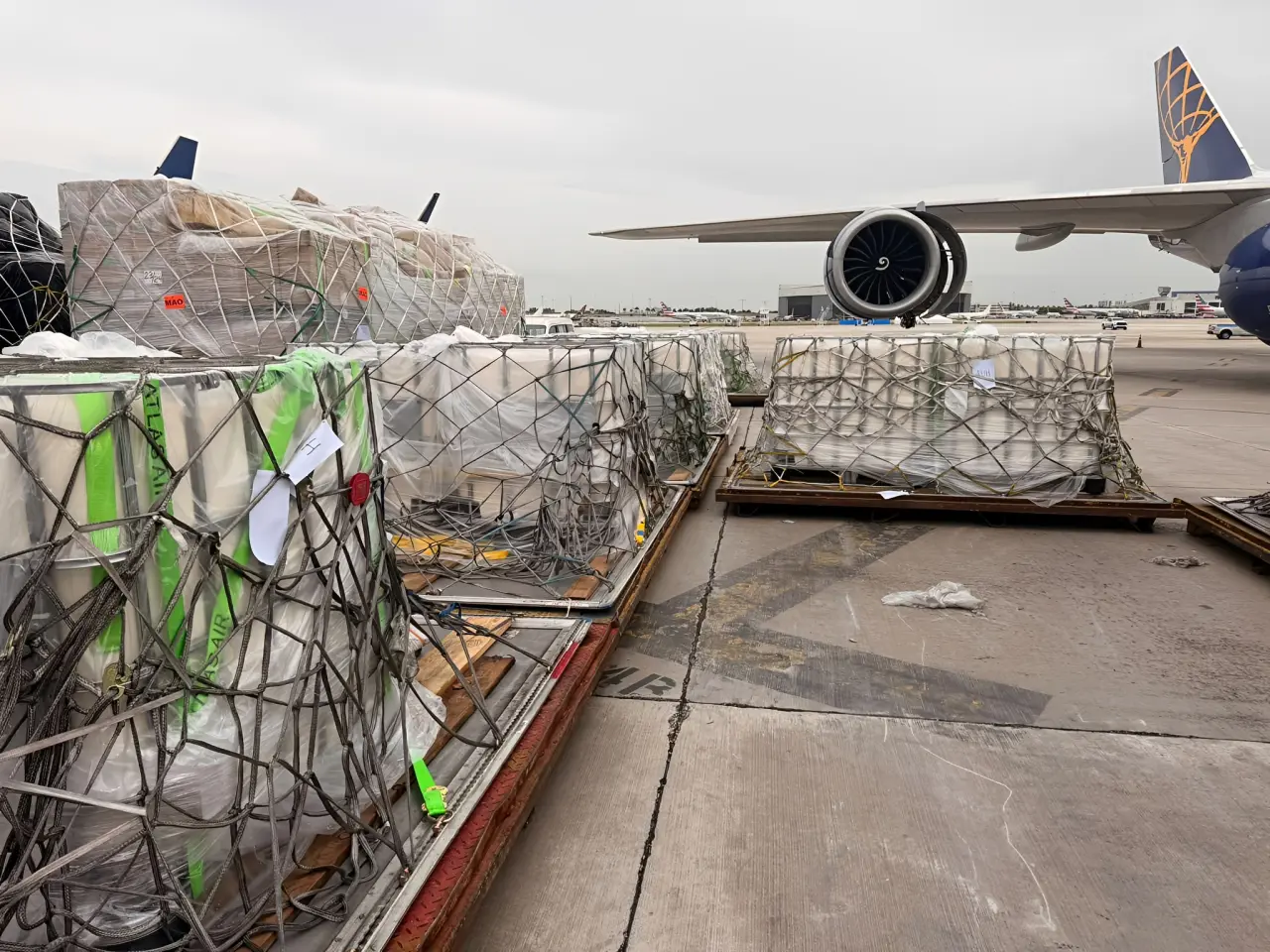
Before the cargo could be accepted for flight, each shipment had to pass through the required aviation security screening process.
That became one of the most important parts of the operation.
Although LP111 was non-hazardous, Altia still had to coordinate the correct screening process for this specific chemical product and make sure the cargo was accepted without creating delays further down the chain.
The team worked closely with screening facilities, trucking providers, ground handlers and airline partners across the three departures.
With around 100 IBCs moving on each flight, the screening process had to be planned carefully around the aircraft schedule.
A delay at that stage would not only affect the cargo on the ground. It could also put pressure on the charter departure itself.
Altia therefore had to keep each movement progressing through screening, acceptance and positioning in the correct sequence.
Preparing Around 97 Tonnes for Each Freighter
Once screening was completed, the cargo could move into the next stage of preparation.
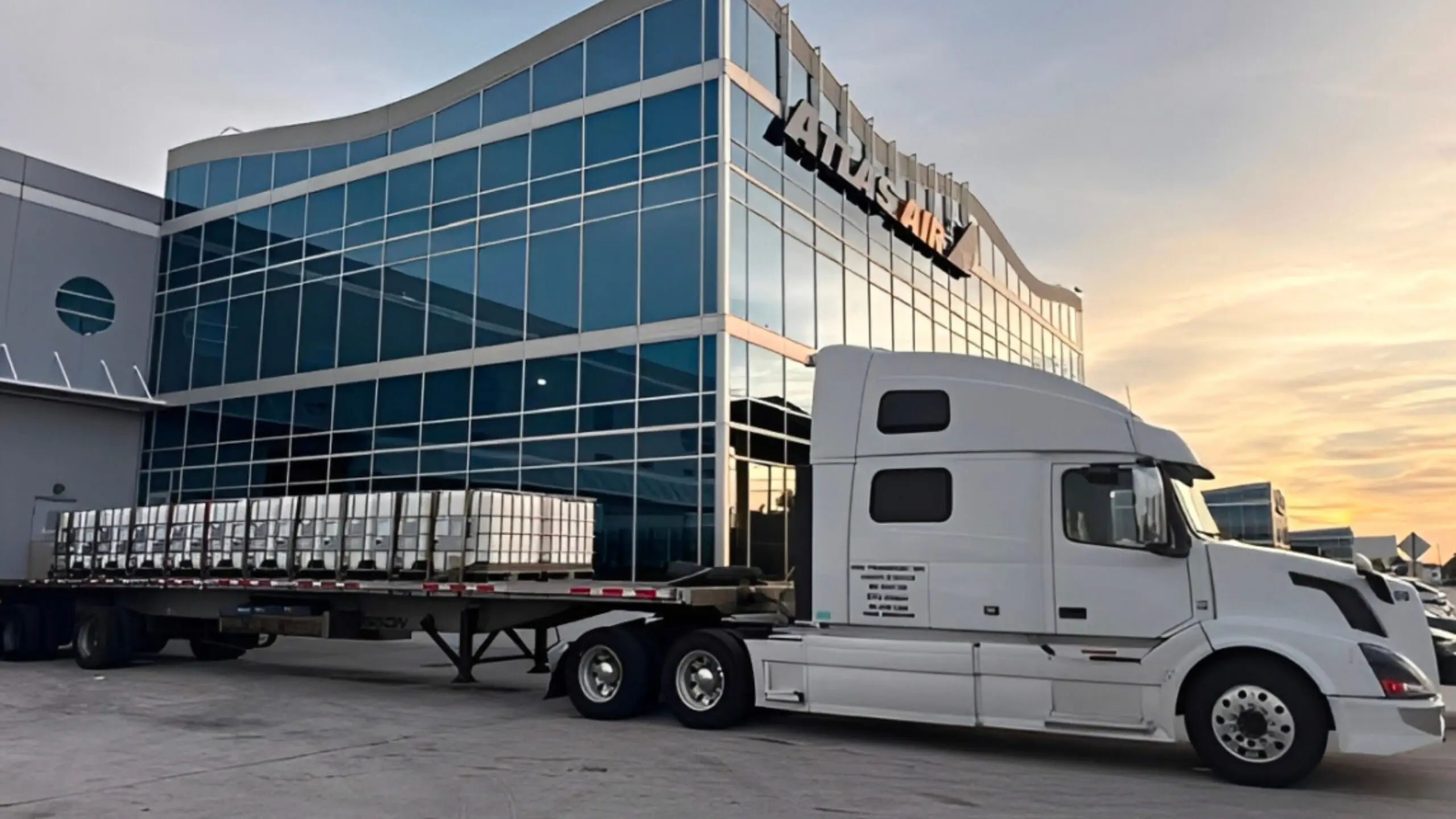
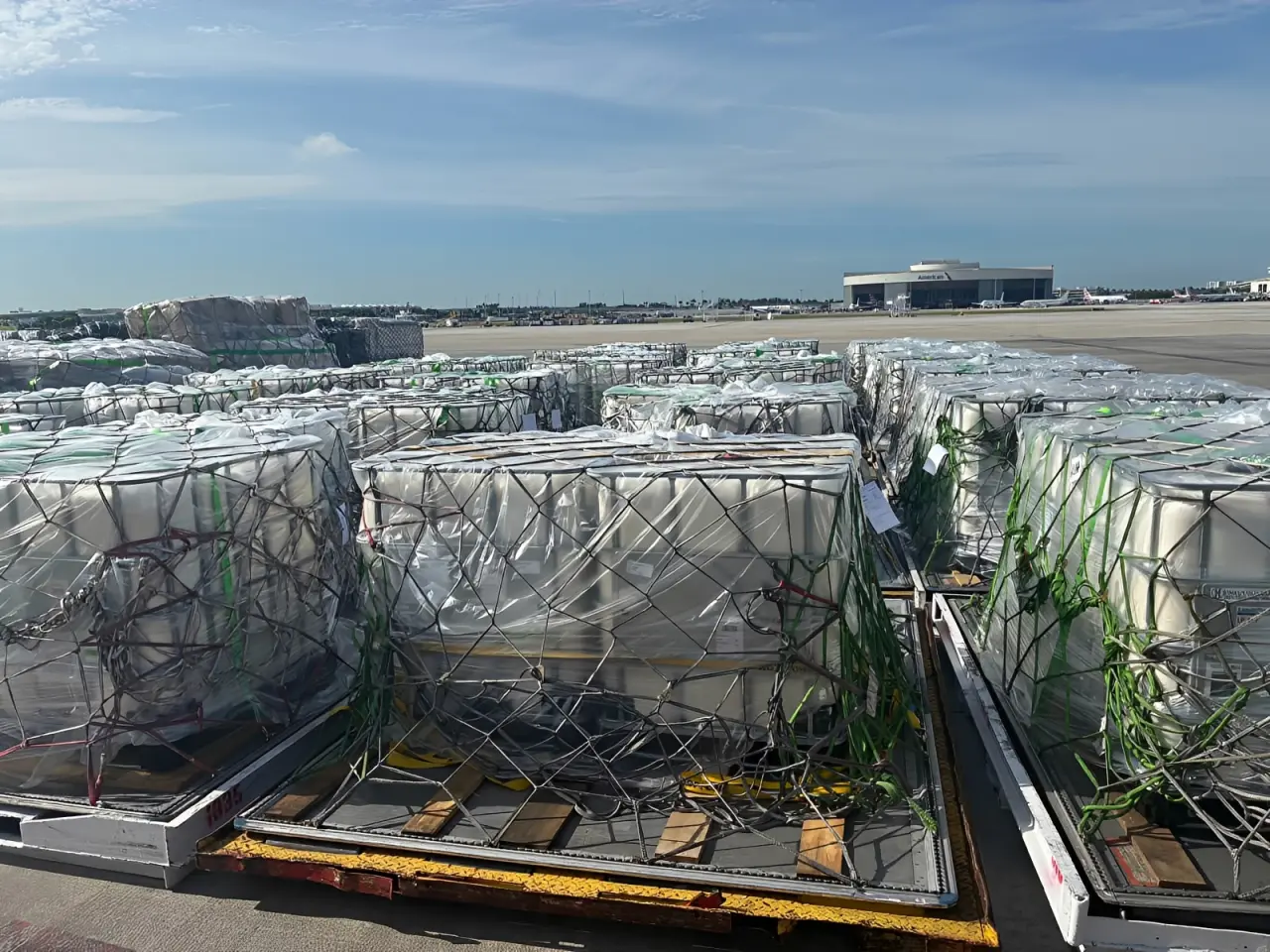
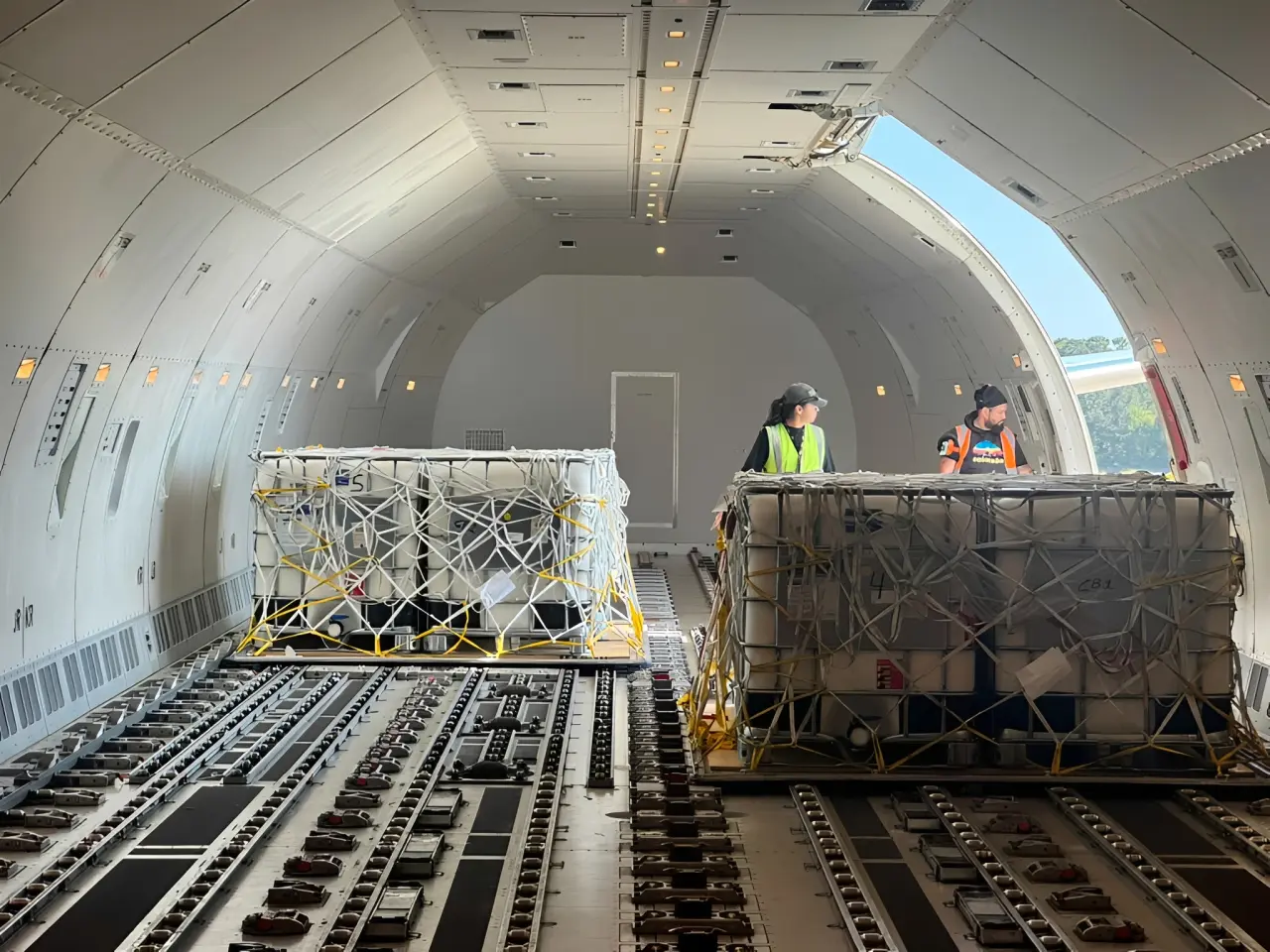
The IBCs were positioned on aircraft pallets, secured and netted before loading.
Each charter carried approximately 97 tonnes, so the handling operation involved a substantial amount of cargo moving through the airport within a relatively tight window.
Altia used one Boeing 747 freighter and two Boeing 777 freighters across the three flights.
The aircraft mix provided the capacity needed for the project while allowing the cargo to move from three separate U.S. gateways.
That meant the team was not repeating one identical operation three times. Each departure had to be managed around the local trucking, screening, ground handling and aircraft arrangements at IAH, DFW and MIA.
Keeping Three Gateways on the Same Schedule
Managing one time-sensitive air cargo charter already requires close coordination.
This project involved three.
Houston, Dallas Fort Worth and Miami all had to feed cargo into the same wider programme for Abu Dhabi.
The operational work therefore extended well beyond securing aircraft capacity.
Trucks had to arrive at the right time. Screening facilities had to be ready to process the cargo. Ground handlers needed enough time to receive and position the IBCs. Airline partners then had to take over for loading and departure.
Altia’s role was to keep those handovers moving and make sure each flight remained aligned with the overall project schedule.
Loading the B747F and B777F Charter Flights
Once the cargo had cleared screening and reached the aircraft, the focus shifted to loading.
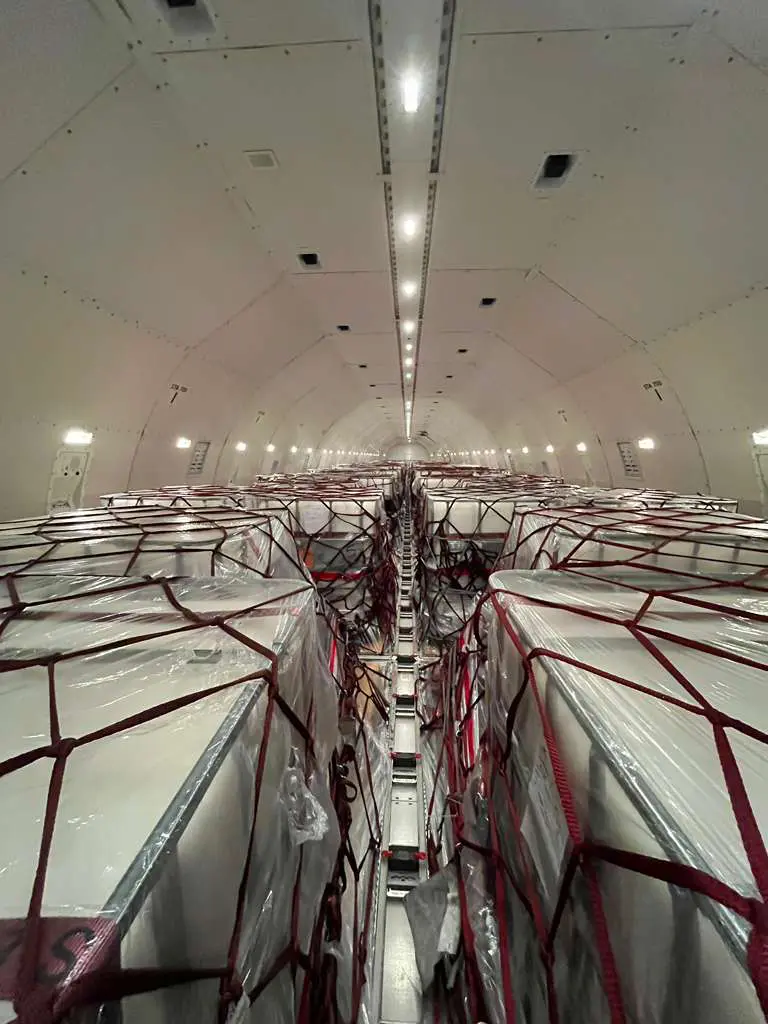
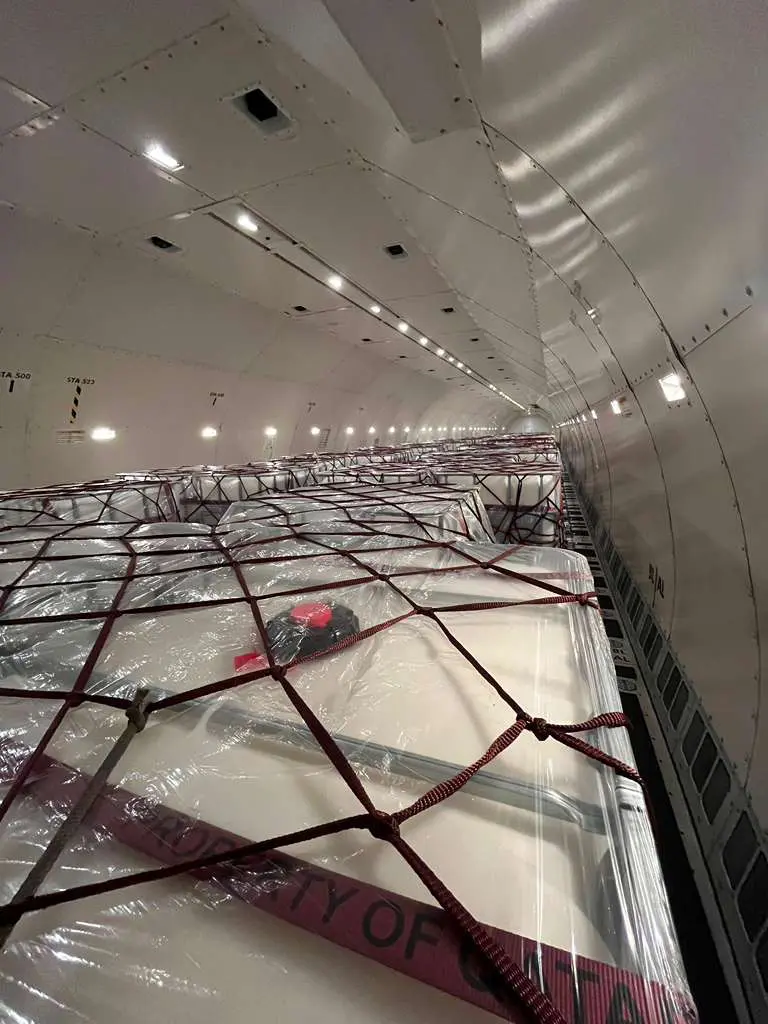
The palletised IBCs were moved onto the freighter main decks and secured for flight.
Across the three charter movements, this process was repeated for close to 300 tonnes of cargo.
The scale becomes easier to understand when viewed per flight: around 100 IBCs and 97,000 kg had to be screened, prepared, positioned and loaded before each aircraft could depart.
That made the ground operation just as important as the flight itself.
The aircraft only became useful once all the work before departure had been completed on time.
From IAH, DFW and MIA to Abu Dhabi
With each flight loaded, the cargo departed the United States for Abu Dhabi.
The three charters together moved approximately 291 tonnes of refinery cargo within the required project schedule.
For Altia, the result came from keeping multiple service providers and airport processes working around the same deadline.
The company coordinated trucking, screening, ground handling and airline capacity across three gateways while maintaining the timing needed for an urgent refinery requirement.
That is also what makes the project relevant for the network looking at U.S. air charter services to the Middle East.
Large-volume, urgent and project cargo movements are rarely solved by aircraft capacity alone. The harder part is making sure every stage before departure is ready when the aircraft is.
For Altia Solutions, this project brought all of those pieces together across three airports and three dedicated freighter flights.
Nearly 300 tonnes moved from the United States to Abu Dhabi on schedule, giving the customer the cargo it needed while showing what careful air charter coordination looks like when time is the one thing the operation cannot afford to lose.

Article by Yefri Rodriguez
Altia Solutions, a member of Bloc Logistics Network
is a full-service logistics company specializing in airfreight and ocean freight forwarding. It provides FCL/LCL, customs clearance, inland transportation, final mile delivery, and DDU/DDP solutions. The company supports international shipments through responsive service, clear communication, reliable execution, and coordinated partnerships tailored to diverse customer and trade requirements.
Bloc Logistics Network is a global platform that connects logistics professionals to share opportunities and collaborate without barriers. Bloc aims to level the playing field by creating an accessible, supportive environment where professionalism and collaboration drive real results. It serves as an ecosystem designed for mutual advancement, ensuring growth, efficiency, and success across the logistics industry.